

AI could never
on the joys and inefficiencies of human creativity and community
If you were in New York this weekend, you know exactly what I mean when I say this past weekend was healing.
This weekend felt like the ideal summer weekend. The kind where you leave the house in the middle of the day and don’t come back until the middle of the night, where you feel hungover on Monday morning from being drunk on sun and delirious joy. Skin was showing, toes were out, music was bumping, and park lawns were full.
This weekend felt like a reminder that this is what we do it for, this is what it means to be human. Amid all that, I kept circling back to three words: AI could never.
It started off as a joke, a bit. Anytime I witnessed something delightfully absurd, I would hit it with “AI could never.” Sitting on the second floor of a courtyard Marriott in FiDi, watching a Peking duck getting flambéed table-side while Taylor Swift plays in the background? AI could never. A guy balancing a TV on his head on top of a bus in the middle of Brooklyn? AI could never. My mayor Muslim, my bagels Jewish, my Christian Dior, Knicks in four?? AI. Could. Never.
It’s become shorthand for a feeling: a celebration of the breadth of the human experience that resists the frenzied race to automate it all away. It’s not always about something that is funny or whimsical. It’s also about creative excellence. The art that moves us. A commitment to doing the work rather than optimizing it.
And with that, I’d like to present a few recent happenings that given me optimism in a year of AI pessimism.
exhibit A: iris van herpen at the brooklyn museum
The Brooklyn Museum recently opened a new exhibition showing Iris van Herpern’s work (on through December 6).
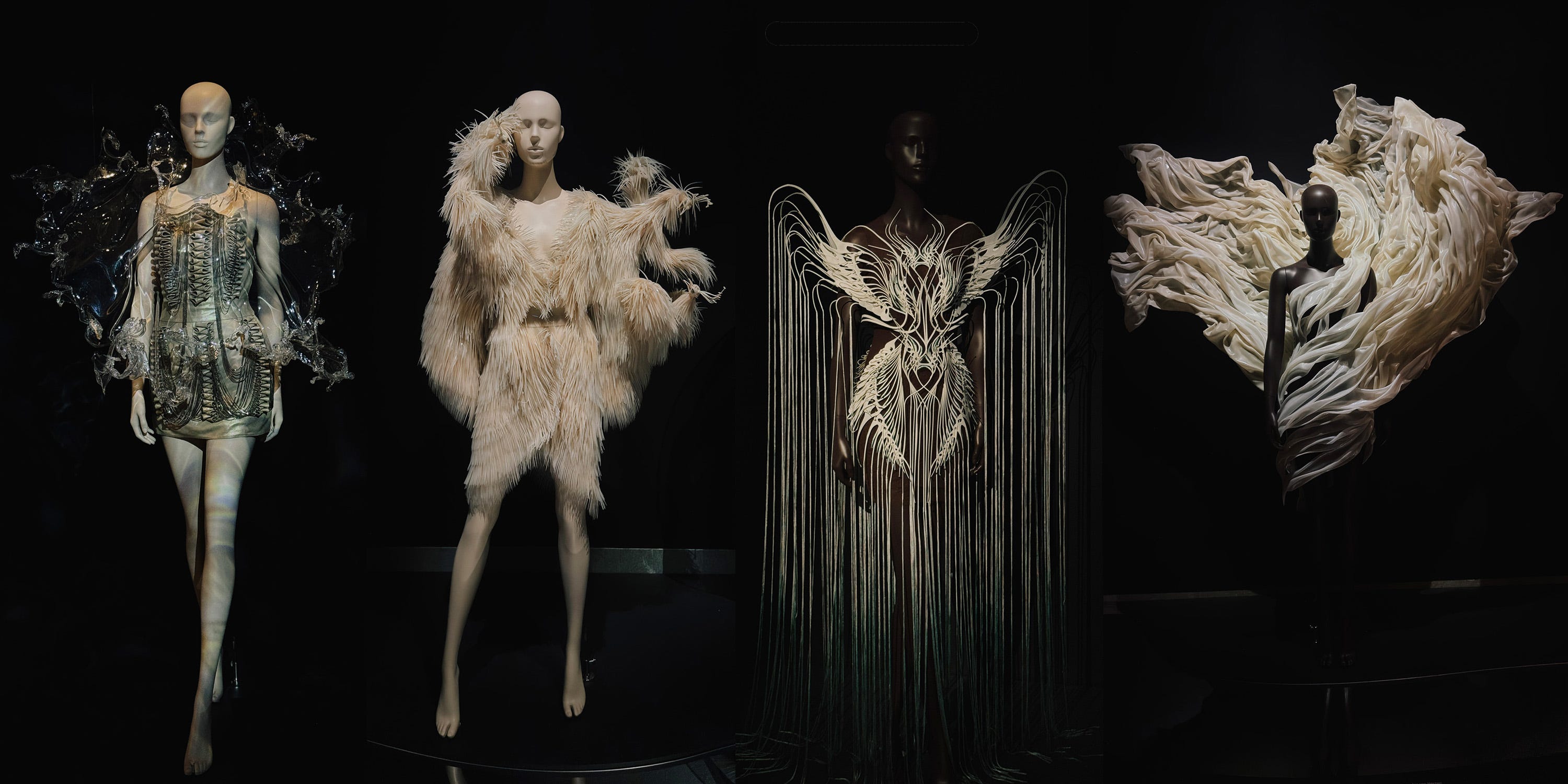
Even as someone who is not much of a fashion nerd, I found myself enraptured by the craft. To call the pieces clothes feels like an understatement. They are works of art, sculptures that defy gravity, technological marvels that happen to be wearable. Van Herpen wove together natural history and new technology to create something unbound by rules. Her haute couture pieces are experimental, avant-garde, and somehow architectural.
The human factor is what brings it to life. The imagination, the engineering, the final piece — exquisite on a mannequin but only truly realized on a human body in motion. The designer, the makers, the model all a part of the creative story.


AI could never. Because van Herpern’s way of looking is more than a “brand” or a “style” that can be mimicked, but an evolving vision in dialogue with what’s around her, a language that extends across years and collections to culminate in this exhibition. She chooses perhaps the hardest way one could go about making a dress, defying efficiency, probably as close as you can get to art for arts sake in the fashion world.
exhibit B: wes anderson at london’s design museum
While in London, I had intended to go to the Schiaparelli exhibition at the V&A but last minute decided to head to the Design Museum instead for Wes Anderson: The Archives (on through August 16!).
This exhibition immerses viewers not only in the distinct worlds of each film, but also the process behind each film and the iterative connectivity between them. Walking through his filmography chronologically, you see the development of taste, of style, of a cinematic language that thrives between arthouse and commercial. Creative credibility is earned time, experience, collaboration, and the bits and pieces that each person brings to the final work. Because what is a film if not a really great group project?
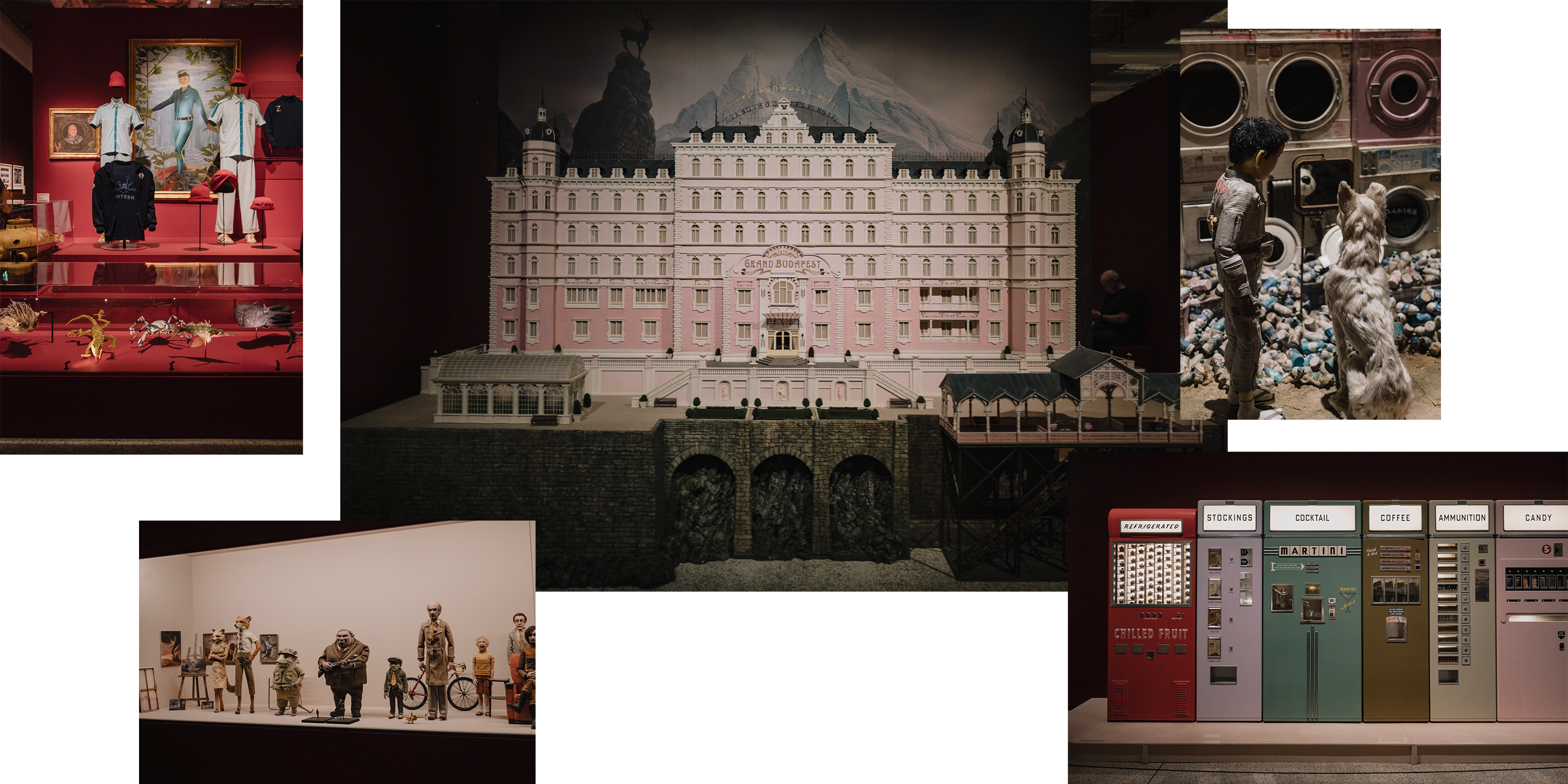
I wasn’t expecting to be so moved seeing the intricacies of every prop, costume, decision. From hand drawn storyboards of his first film to commissioned illustrated book covers used in Moonrise Kingdom to the scaled models from Isle of Dogs. Off screen, the objects felt even more precious, a product of human hands and a creative community.
I walked away feeling comforted: there is still uncompromising creative spirit willing to spend the time, and an audience that appreciates it. Plus the wide-eyed wonder of the kids at the exhibition, who will not know a world without AI, but are still dazzled by these analogue creative artifacts.
exhibit C: allez paris
I landed in a sweltering Paris about an hour before the UEFA Champions League Final kicked off. By the time I got into the city, the bars and brasseries had people spilling into the streets, braving the heatwave in a generally AC-less city. The tension was palpable with a tie that went into penalty kicks.
From the comfort of my air-conditioned hotel room, I heard the cheers and fireworks that erupted the moment PSG won. It didn’t matter that there was still a full hour of daylight left at 9pm and the fireworks could only be heard and not seen.


Street level, people were laughing, embracing, singing drunkenly. Crowds chanted as cars honked, others rode by gleefully cheering and waving flags from motorbikes and vélib’s. And of course, the signature fumigènes blasting smoke and flares in the streets. That night, the streets shut down, the Eiffel Tower lit up in red and blue and hundreds were arrested as they set cars on fire and vandalized shops.
The thrill of the moment was unmatched, and even the heat wave couldn’t slow down a city that lost its mind.
exhibit D: knicks in five
Which brings me back to this past weekend. I made it back stateside for the NBA finals. The feeling in the city was already electric, doused in blue and orange.
Every bar was a sports bar on game nights. Hell, every restaurant became a sports bar. Every screen was showing the game. TVs were wheeled outside, heroes projected the game onto buildings, someone held up a laptop in the middle of the street with a crowd around him. Watch parties gathered outside bodegas, on sidewalks, on stoops, in community gardens. When the Knicks' owner canceled an official outside arena watch party for Game 4, Mamdani blasted the game on digital LinkNYC sidewalk kiosks all across the city. The organic nature of the unsanctioned watch parties felt the most alive.
By the time Game 5 rolled around, Fort Greene had become one continuous block party. People were hanging off fire escapes, on balconies and on rooftops. So many people gathered around Habana Outpost that they shut down the block party by half time.
My group ended up on Dekalb across from Saraghina (closed, but the game was being projected above it). Cars, trucks, and at one point even a trolley drove by (we cheered for them all). By the 4th quarter, every stranger felt like a friend, and we moved as one. Breathing in smoke, exhaust, drinking less than cold beer in the heat. It didn’t matter, we are in the greatest city in the world.
And then it happened, the entire city erupted in joy. Illicit fireworks set off. One guy was offering slices of pizza to people, and someone put on Empire State of Mind. There’s nothing as cathartic as shout-singing that anthem with crowds in the street.
On the walk home, Brooklyn was Brooklyn-ing. A DJ set up outside Corridor. A trio of kids stood on top of a trashcan in front of Mr. Mango shouting “Let’s go Knicks” to the delight of deliquent adults around them. A gaggle of people danced on top of a B26.
That night, the city was healed. Subway platforms became parties and no one cared the train was late. Elated fans hugged members of the NYPD. There’s a video of a couple guys helping out the sanitation workers clean up.
Everything was a little grimy, a little chaotic, a little uncomfortable, but completely alive. It was no optimally designed experience — but it was transcendent. All was right.


The partying spilled into Sunday. Spike Lee threw a block party. Jose Alvarado and Jordan Clarkson pulled up at the Puerto Rican Day Parade alongside Mayor Mamdani.
It may have started off with basketball, but in the end it is about city identity, about the community coming together when things get tough, about the unifying pride of people from all walks of life forgetting about differences. For one night, New York natives claim Staten Island, Westchester. They welcome the transplants and bandwagoners and even embrace the tourists as long as they’re cheering for the Knicks.
AI could never
These days every ad is trying to sell a faster way to think, work, live — less friction, less effort. But there’s a beauty in the mess. In taking the time to do things the “old” way, or in choosing the meandering path from A to B.
The best things in life are not about efficiency or productivity. It’s creating art for the commitment to a vision. It’s dancing in the streets among strangers. No tech overlord can take this from us — even if they buy up the stadiums and the tickets, we’ll always have the streets.